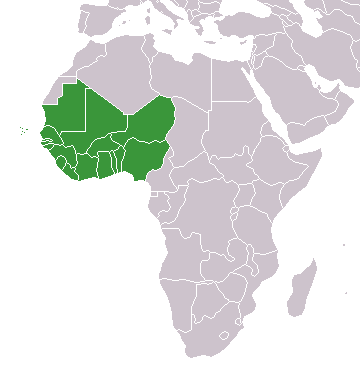
West Africa, the continent's westernmost region, encompasses 16 countries and an estimated 419 million people as of 2021, making it one of Africa's fastest-growing areas both demographically and economically. Historically, powerful empires like Mali and Gao flourished by controlling trans-Saharan trade in gold, ivory, and advanced iron-working, before the region was profoundly shaped by the Atlantic slave trade. Subsequently, European colonial powers, particularly France and Britain, exploited West Africa for extractive resources such as cocoa, timber, and minerals into the 19th and 20th centuries.
Since achieving independence, several nations, including Nigeria, Ghana, and Senegal, have emerged as key players in regional and global economies. Characterized by diverse biomes ranging from tropical forests to drylands, West Africa boasts rich biodiversity influenced by the dry Sahara and the Atlantic monsoons. However, this vibrant environment faces critical threats from deforestation, biodiversity loss, pollution from mining and plastics, and climate change.
Hello from Cyprus ♥️