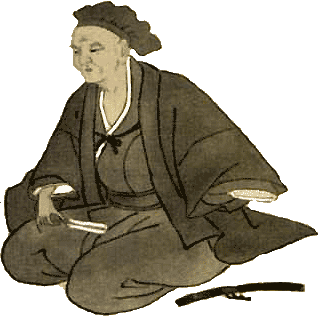
Murata Jukō (1423–1502) is revered in Japanese cultural history as the founder of the Japanese tea ceremony, specifically developing the wabi-cha style which embraced native Japanese implements and aesthetics. Initially interested in tea as a stimulant, his profound study of Zen Buddhism under Ikkyū Sōjun inspired him, guided by Ikkyū's teaching that "the Buddha dharma is also in the Way of Tea." Jukō articulated his foundational theories in the "Kokoro no fumi" (Letter of the heart) around 1488, advocating for a harmonious blend of rustic Japanese and refined Chinese tastes, rather than an exclusive preference for either.
He emphasized four core values: humble reverence (kin), respect (kei), purity (sei), and calmness (jaku), while also innovating the yojohan (four-and-a-half mat teahouse) to create a more intimate, spiritual environment. Jukō incorporated aesthetic concepts like hie (chill) and kare (withered) from renga poetry into the ceremony, which he felt were expressed in Japanese pottery. His groundbreaking work established the philosophical and aesthetic framework for future tea masters, notably paving the way for Sen no Rikyū.