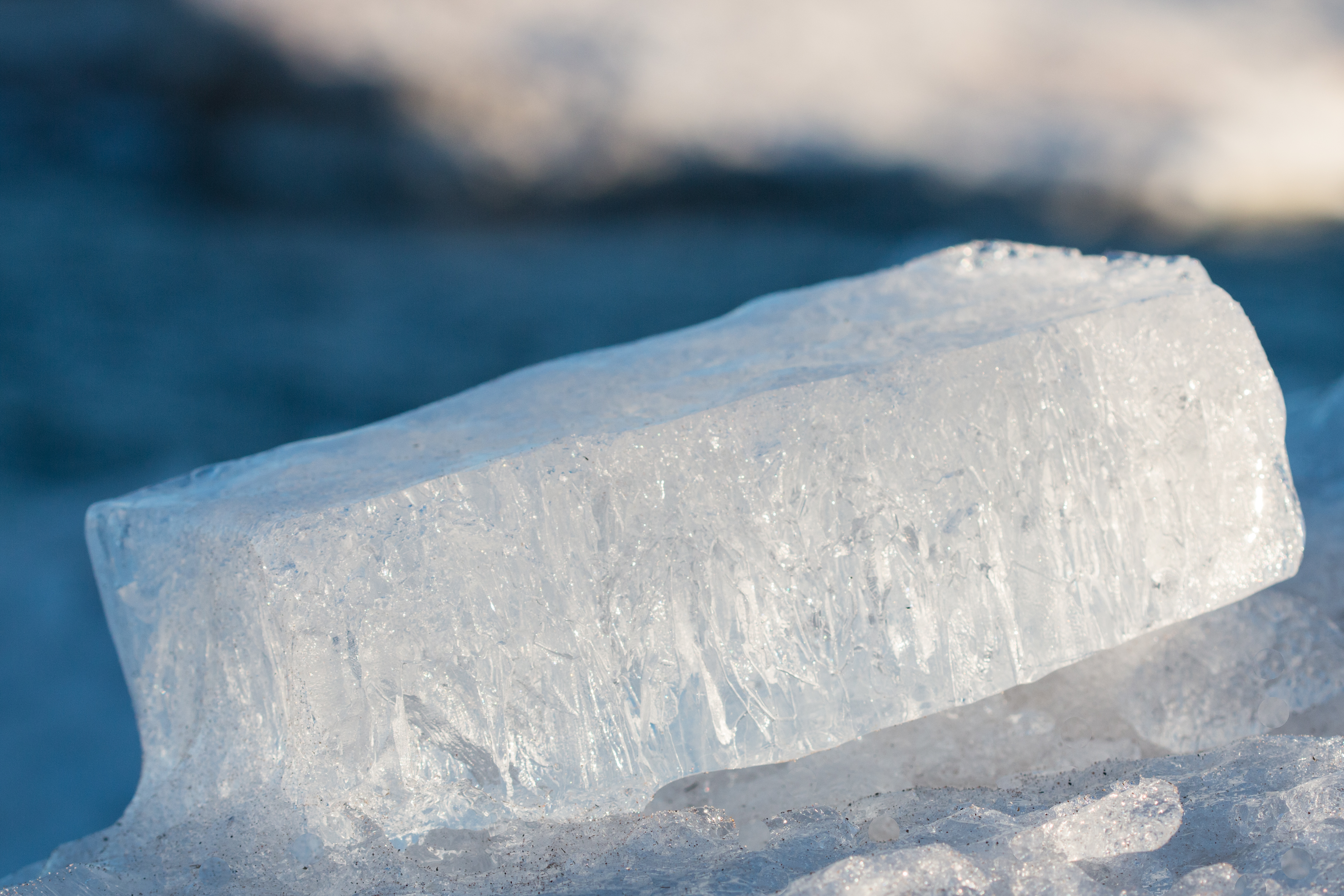
Ice is frozen water, solidifying at or below 0 °C (32 °F), and is recognized as a mineral due to its crystalline inorganic structure, appearing transparent or bluish-white based on impurities. While virtually all ice on Earth has a hexagonal structure (ice Ih), at least nineteen different phases can exist depending on temperature and pressure, with low-density amorphous ice overwhelmingly dominant in interstellar space. On Earth, ice is abundant in polar regions, glaciers, and as precipitation, playing a vital role in the water cycle; however, its volume is decreasing rapidly due to climate change, contributing significantly to sea level rise, particularly from grounded ice. Humans have leveraged ice for thousands of years for cooling, transport, and recreation, but one of its most remarkable properties is that solid ice is uniquely about 8.3% less dense than liquid water, allowing it to float and causing expansion that impacts both natural landscapes and infrastructure.
Hello from Cyprus ♥️