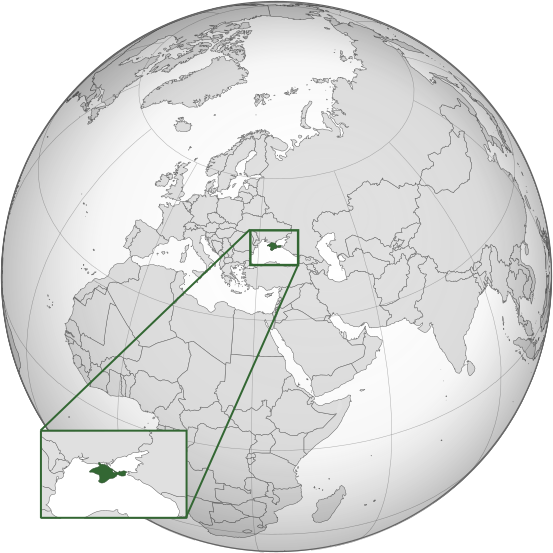
Crimea is a historically significant peninsula in Eastern Europe, located on the northern coast of the Black Sea, internationally recognized as part of Ukraine, despite being under Russian occupation since 2014. Known historically as the Tauric Peninsula, it has been a crucial crossroads of cultures, experiencing Greek colonization, Roman and Byzantine influence, and the rise of the powerful Crimean Khanate, which later became a dependency of the Ottoman Empire. Its strategic position led to its annexation by the Russian Empire in 1783 after the Russo-Turkish War, and it was the central stage for the 1854 Crimean War.
During the Soviet era, the peninsula endured the tragic 1944 deportation and ethnic cleansing of Crimean Tatars under Joseph Stalin, before being transferred from the Russian SFSR to the Ukrainian SSR in 1954. After Ukraine's independence in 1991, Crimea became an autonomous republic, but escalating tensions over its status culminated in Russia's 2014 annexation. Russia further solidified its control by constructing the 2018 Crimean Bridge, linking the peninsula to mainland Russia, an action widely condemned by the international community.